
New First-Time Buyer Scheme Confirmed: Could You Buy with Just a 2.5% Deposit?
The Autumn Budget has confirmed a new government-backed scheme designed to help first-time buyers onto the property ladder with a smaller deposit. Here's how Your First Home will work, who could qualify and when applications are expected to open.
A New Opportunity for First-Time Buyers
For many people hoping to buy their first home, the biggest challenge isn't necessarily affording the monthly mortgage repayments. It's saving enough for the deposit in the first place.
With rental payments, household bills and everyday living costs all competing for attention, building up thousands of pounds in savings can feel like an uphill struggle.
However, this week's Autumn Budget has brought some potentially welcome news.
The government has confirmed Your First Home, a new equity loan scheme that will allow eligible first-time buyers in England to purchase a new-build property with a deposit of just 2.5%.
It's a significant reduction compared with the 5% or 10% deposits many buyers currently aim for, and could help some aspiring homeowners take their first step onto the property ladder sooner than expected.
How Will the New Scheme Work?
Under the confirmed plans, eligible buyers will be able to purchase a new-build home using a combination of their own deposit, a government equity loan and a repayment mortgage.
The government will provide an equity loan worth 20% of the property's purchase price, which will be interest-free for the first five years.
For example, on a property costing £250,000:
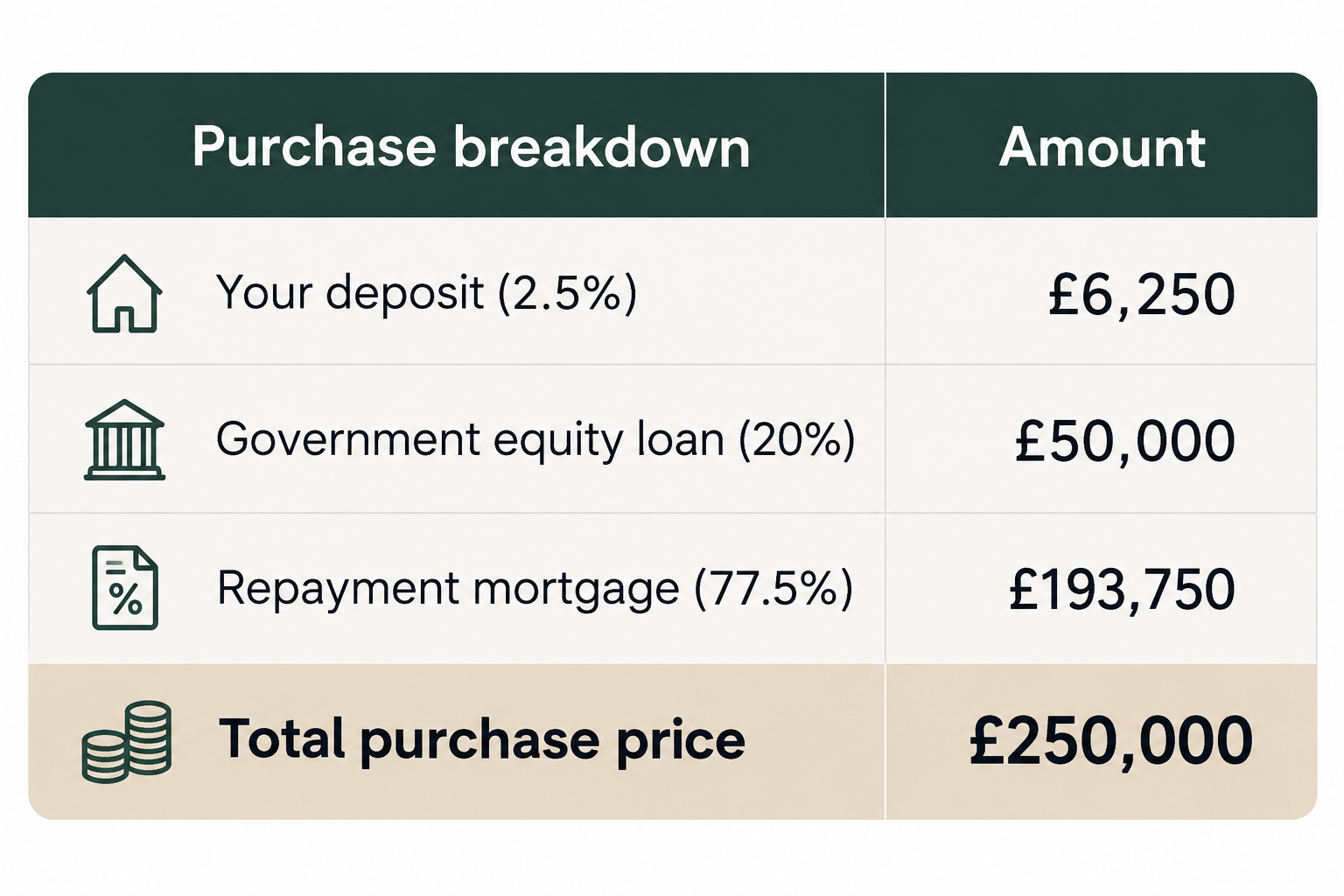
Without the scheme, a buyer using a conventional 95% mortgage would typically need a £12,500 deposit and a mortgage of £237,500.
For someone who has already saved £6,000 or £7,000, the difference could be considerable.
Of course, buyers will still need to budget for additional purchasing costs, and the equity loan must eventually be repaid.
Who Will Qualify?
The scheme is designed to support first-time buyers who may otherwise struggle to purchase a home.
To qualify, buyers will need to meet certain conditions, including:
- Being a first-time buyer purchasing a home in England.
- Buying an eligible new-build property from a participating developer.
- Having a household income of no more than £110,000 outside London.
- Providing a deposit of between 2.5% and 15%.
- Purchasing within the relevant local property price cap.
- Meeting the affordability requirements of a participating mortgage lender.
For buyers looking in Bolton, Bury and the surrounding areas, the £110,000 household income limit will apply.
Property price caps will vary by local authority, with further details expected before the scheme opens.
When Can Buyers Apply?
Although the scheme has now been confirmed, applications aren't open just yet.
The government expects pre-registration to become available by the end of December 2026, with full applications opening in February 2027.
The first equity loans are expected to be issued from April 2027.
That gives prospective buyers a few months to review their finances, explore mortgage options and understand whether the scheme could work for them.
What Happens After the First Five Years?
One important consideration is that the government contribution isn't a grant or a gift.
It's an equity loan, meaning the amount you repay is linked to the value of your property.
For example, if you purchased a home for £250,000 with a £50,000 government equity loan, the government would hold a 20% equity interest.
If the property later increased in value to £300,000, repaying the full equity loan would cost £60,000. Equally, if the property's value fell, the amount repayable could reduce.
The loan will be interest-free for the first five years, after which interest charges will begin and increase gradually under the scheme's terms.
It's therefore important to consider the longer-term costs, rather than focusing solely on the smaller initial deposit.
What If You're Looking for an Older Property?
While Your First Home could be an attractive option, it won't suit everyone.
The scheme will only apply to eligible new-build properties, which means buyers hoping to purchase a traditional terrace, character cottage, semi-detached home or older property will need to explore other routes.
And there are still plenty of reasons to consider the wider property market.
For some buyers, an established home may offer more space, a larger garden or a location closer to family, schools and local amenities.
A conventional mortgage, shared ownership or other available first-time buyer support may prove more suitable, depending on individual circumstances.
The important thing is to compare your options rather than assume the newest scheme will automatically offer the best solution.
More Support for First-Time Buyers
The Autumn Budget also confirmed changes to savings schemes designed to help people build a deposit.
A new First Time Buyer ISA is planned for April 2029, offering a 25% government bonus on eligible savings, with contributions of up to £4,000 a year.
There is also a change for existing Lifetime ISA savers. From 29 October 2026, eligible first-time buyers purchasing a property above the £450,000 Lifetime ISA limit will face a reduced withdrawal charge of 20%, rather than 25%.
These changes could offer additional flexibility, particularly for buyers who have been saving towards their first property for several years.
Should You Wait Until 2027 to Buy?
Not necessarily.
If you're hoping to buy your first home within the next six to twelve months, the most useful thing you can do now is understand your options.
Speak to an independent mortgage adviser, review your savings and establish a realistic budget.
If you're considering a new-build home, it may be worth exploring whether Your First Home could offer a suitable route.
However, if you've already found an existing property that meets your needs and is comfortably within your budget, waiting for a scheme that doesn't apply to that home may not make sense.
Ultimately, buying your first home is about finding the right property, at the right price, with a mortgage you can comfortably manage.
The new scheme could make that possible for more people, but careful planning remains just as important.
Start Your Property Search with Newton & Co
If you're planning to buy your first home in Bolton, Bury or the surrounding villages, we'd love to help you find somewhere that feels right.
Whether you're just beginning to explore your options or already have a mortgage agreement in principle, our Heads Up Property Alerts can help you stay one step ahead.
Register to receive early notifications of suitable properties, including homes before they reach the major property portals.
Your first home could be closer than you think.